Expertise Areas
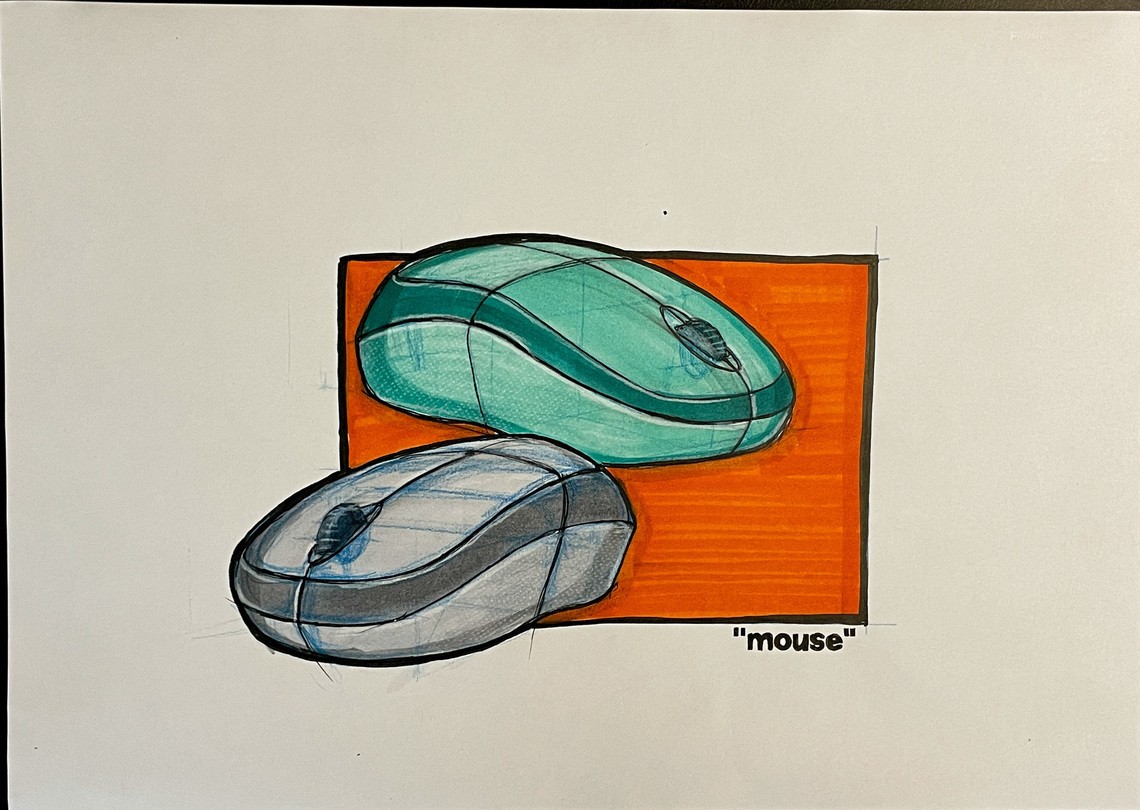
Creativity & Aesthetics
Creativity and Aesthetics involves using methods such as brainstorming and bodystorming to generate, select, and refine ideas, while combining physical and digital exploration, benchmarking, reflection, and a balance of intuition and knowledge to achieve coherent form and interaction.
I entered TU/e with experience in graphic design, photography, video editing, and colour grading. This gave me a strong foundation in visual communication, but during my studies I learned to apply aesthetics to products and interactions rather than only to visualizaitons.
Through From Idea to Design, I learned creative methods such as brainstorming, bodystorming, idea generation techniques, and concept evaluation methods, which I later adapted to different project needs. Exploratory Sketching taught me to use perspective, scenarios, people, arrows, and material rendering to explore and communicate how products function and are used. Exploratory Making further changed my process by teaching me to use physical models as thinking tools rather than as representations of finished ideas.
In Project 3, I compared sketching, LEGO Duplo, and physical machine prototyping as low-fidelity ideation methods, which showed me that different media support different forms of creativity. Aesthetics of Interaction also taught me to consider feedback, feedforward, affordances, and bodily experience as part of aesthetic quality.
During my Škoda Auto CMF internship, I developed my understanding of materials, textures, surfaces, design language, and industrial constraints. I created mood, material, concept, and tactile boards, conducted automotive benchmarking, and iterated speaker forms and surface patterns.
Creativity & Aesthetics essentially translates insights from users, technology, data, and business into coherent forms, interactions, materials, and visual identities.
During my FBP, I expanded my creative process by combining sketching, first-person sensory observations, parametric form exploration, physical material studies, and AI-assisted visualisation. I explored multiple aesthetic narratives; visible sound, natural growth, Czech heritage, geographic identity, and Škoda’s Modern Solid language while experimenting with different ways of expressing acoustic function through surface design.
I learned to use AI as a creative partner rather than a replacement for design thinking, translating sketches, mental images, and abstract ideas into visual proposals that could be evaluated and developed further. This allowed me to rapidly explore alternative aesthetic directions, scales, and applications while maintaining authorship over the final outcome.
I also learned to treat sound, form, tactility, colour, and perceived quality as one integrated aesthetic experience. Reflection-in- and on-action helped me balance intuition, benchmarking, and research, resulting in two distinct but coherent trim-line identities.




User & Society
I understand User & Society as designing with awareness of people’s needs, abilities, behaviours, contexts, and the broader impact products have on society. The course User-Centered Design introduced me to interviews, surveys, observations, usability testing, and qualitative analysis, providing the foundation for involving users throughout the design process. Across nearly all my projects, I recruited participants, prepared research protocols, facilitated sessions, analysed findings, and translated insights into design decisions.
My strongest development was during Project 3, which focused entirely on understanding users during the early ideation phase of modular textile-processing machines. Our team compared sketching, LEGO Duplo, and prototyping directly on a stripped sewing machine with 32 participants who had sewing-machine experience. By combining quantitative survey data and statistical analysis with qualitative observations and thematic analysis, we identified how different prototyping methods support different user needs and design goals. This project taught me to critically select research and evaluation methods based on the question being asked rather than relying on a single approach.
I also strongly connect User & Society to my vision on sustainability. Products influence society through resource consumption, accessibility, maintenance, repairability, and end-of-life treatment. Because sustainable design is a core value of mine, I consistently consider modularity, longevity, recyclability, and responsible material use throughout my projects.
User & Society grounds decisions from all other expertise areas in people’s needs, abilities, contexts, and the wider social and environmental impact of a design.
During my FBP, I learned to move beyond my own preferences as a car enthusiast and design for the intended users of affordable family vehicles. Internal customer research first shaped the patterns and target group, while first-person driving research helped me identify questions rather than treat my experience as representative.
I then designed, piloted, and revised a study with 20 participants aged 35–50, reducing cognitive load and evaluating both sound preferences and physical samples. The results challenged assumptions, particularly that useful mechanical feedback would always be valued. Translating these differences into Safety-Focused and High-Feedback trim concepts showed me that user-centred design is not about averaging preferences, but recognising conflicting needs, contexts, and interpretations. I also became more critical of sampling, cultural influence, ethics, and methodological limitations.
From Idea to Design (DCB100)
Project 1 Design (DPB100)
Project 3 Design Research (DPB220)
Design <> Research (DDB100)
Making Sense of Sensors (DAB100)
Design for Sustainable Future: Project (7XAUA0)
Design for Sustainable Future: User (7XSUA0)
User Centered Design (DDB200)
Ethics & History of Technology (0SAB0)
Design for a Sustainable Future (7XEUA0)
+ Courses



Technology & Realization
I entered TU/e with prior knowledge of CAD, basic electronics and circuits. During Creative Programming and Creative Electronics, I expanded this knowledge through Processing, sensors, actuators, and interactive systems. More importantly, I developed a more critical attitude toward technology, I no longer add electronics simply because they are available, but consider whether they create meaningful functional or experiential value. I believe T&R turns creative and user-centred concepts into feasible products by applying engineering knowledge, manufacturing methods, material understanding, and technical validation.
Throughout my studies, I developed practical skills in CAD, electronics, prototyping, additive manufacturing, textile processing, and composites. Repeated 3D-printing failures taught me to account for tolerances, orientation, supports, assembly, and material behaviour. Aesthetics of Interaction helped me move beyond functional prints by introducing post-processing and higher-quality prototype construction. Through extracurricular visits to Formnext, I broadened my knowledge of industrial additive manufacturing and later applied it by printing moulds for composite bicycle and automotive components.
At Crafting Wearable senses, I've learnt how to use different textile processing machines.
Projects like the flax-fibre composite beam, and Engineering Design strengthened my ability to connect calculations, material properties, mechanisms, and manufacturing methods to physical outcomes.
My internship changed how I evaluate feasibility. I learned that realization also involves standards, wear, fire, emissions, impact safety, coatings, cost, and scalability. Working with suppliers and prototyping teams taught me to accept technical constraints as design input rather than obstacles. I now approach realization through testing, documentation, iteration, and informed compromise between design intent and production reality.
During my FBP, I learned to develop prototypes as technically meaningful components rather than visual representations. Working with PLA, PETG, and TPU taught me how material behaviour, moisture, print orientation, speed, wall construction, infill, and scale influence the feasibility and physical quality of a design. Producing large samples with Devinn also exposed me to industrial workflows and the importance of communicating specifications clearly. Recurring print failures taught me to document imperfections and adapt constructively; incomplete prints became thickness spacers for later testing.
Through factory observations and in-car experiments, I also learned that acoustic performance depends on how a component is mounted and integrated. I now approach realization as an iterative negotiation between design intention, material behaviour, manufacturing, and application context.
From Idea to Design (DCB100)
Project 2 Design (DPB210)
Exploratory Making (DCB220)
Creative Electronics (DBB200)
Engineering Design (4WBB0)
Aesthetics of Interaction (DCB200)
Design for Sustainable Future: User (7XSUA0)
Design for Sustainable Future: Project (7XAUA0)
Internship (DPB320)
Creative Mechanics Basic (DBB111)
Creative Mechanics Advanced (DBB114)
+ Courses

Math, Data & Computing
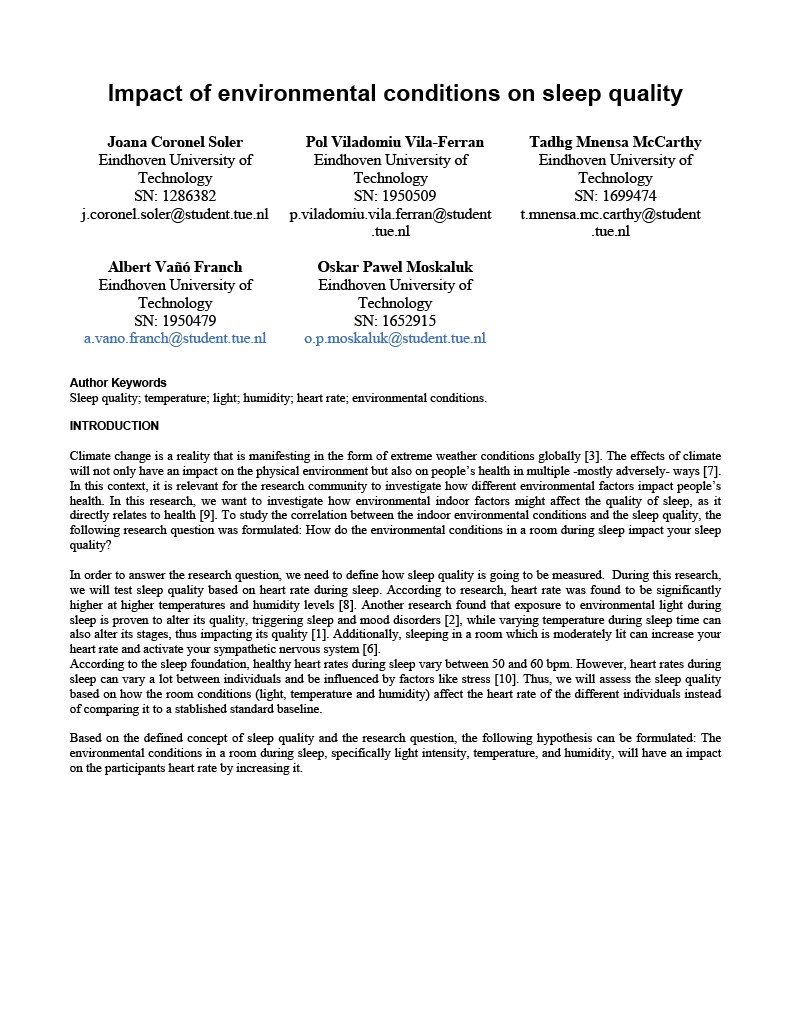
Math, Data & Computing became increasingly relevant throughout my bachelor as I learned to use data, calculations, and software to support design decisions rather than relying only on intuition. Data Analytics introduced me to statistics and Python, while Making Sense of Sensors taught me to clean, organise, analyse, and visualise sensor data. Analysing the relationship between environmental conditions and sleep quality showed me that data requires interpretation: incomplete or poorly structured datasets can easily produce misleading conclusions.
I applied these skills in several projects. In Project 3, I combined statistical analysis with qualitative findings to compare low-fidelity prototyping methods. My flax-fibre beam and Engineering Design projects required structural calculations, while Project 1 and Creative Mechanics Basic and Advanced introduced simulation and mathematical modelling.
During my internship, I independently learned Rhino and used it for pattern generation and geometry development. I adapted models according to manufacturing feedback and examined how surface openness affected acoustic transparency.
Extracurricular hackathons and developing the Windmill Hacks website further strengthened my programming experience. My attitude toward computation has also become more critical: I use data, code, and AI when they clarify or extend the design process, while remaining aware of their assumptions, limitations, and need for responsible interpretation.
I think Math, Data & Computing provides evidence, calculations, simulations, and computational tools that support user research, technical development, concept generation, and informed business decisions.
During my FBP, I developed from using mathematics mainly as a modelling aid to using it as part of design reasoning. I applied Fibonacci ratios, randomized distributions, wave relationships, and QRD principles to generate and compare surface patterns in Grasshopper. I also analysed two complex datasets: acoustic measurements across frequencies, angles, and thicknesses, and user responses concerning sound levels and pattern preferences. Using Excel, I converted responses into preference scores, first-place counts, distributions, user groupings, and engagement-versus-safety comparisons.
This taught me that data does not produce design decisions automatically; analysis choices and visual representations influence interpretation. I became more critical about uncertainty, uncontrolled variables, small sample sizes, and the difference between exploratory patterns and statistically validated conclusions.
Project 1 Design (DPB100)
Project 2 Design (DPB210)
Project 3 Design Research (DPB220)
Creative Programming (DBB100)
Creative Electronics (DBB200)
Exploratory Making (DCB220)
Design for Sustainable Future: Project (7XAUA0)
Engineering Design (4WBB0)
Making Sense of Sensors (DAB100)
Internship (DPB320)
Calculus (2WAB0)
Physics for Engineers (3PHYS)
Creative Mechanics Basic (DBB111)
Foundations of Data Analytics (2IAB1)
Creative Mechanics Advanced (DBB114)
+ Courses
Business & Entrepreneurship
I entered TU/e with a basic entrepreneurial foundation from working as a freelance designer. I already understood client communication, pricing, deadlines, and the need to produce work that creates clear value. During my bachelor, I developed this from practical experience into a more structured understanding of markets, stakeholders, risks, and value propositions.
In Design Innovation Methods, I learned to use personas, journey maps, competitor benchmarking, stakeholder mapping, and PESTEL analysis. Our work on IKEA examined its market position, customer segments, operational challenges, and sustainability transition. We proposed concepts including Green Zones, AR/VR consultancy, digital pricing, and IKEA Thrift, a circular second-hand marketplace. This taught me to evaluate concepts not only by their originality, but also by their customer value, operational feasibility, competitive position, and potential to generate long-term revenue. Receiving an excellent grade confirmed that I could apply these methods coherently.
My strongest entrepreneurial development came through Fabrique AI, which evolved from Project 2 into a startup. I worked across concept development, branding, manufacturing planning, investor communication, and business strategy. Workshops at Innovation Space introduced me to patents and intellectual-property protection, while discussions with investors and external stakeholders taught me to communicate value differently depending on their priorities. I also learned that entrepreneurship involves risk, persistence, and the willingness to pursue resources and opportunities beyond those immediately available.
My experience representing a bicycle brand at trade fairs further developed my ability to build professional relationships and discuss products, markets, costs, and commercial opportunities. In Project 3, I involved Fashion Tech Farm and a Polish sewing-machine manufacturer to validate our modular machine concepts with both users and industry.
During my internship, I learned how small changes in geometry, material thickness, or surface design can create substantial cost differences at mass-production scale. Supplier collaboration showed me how tooling, scalability, brand positioning, and production efficiency influence design decisions.
I now approach business considerations as part of design from the beginning, rather than as justification added afterward. My goal is to create products that are desirable, technically feasible, commercially viable, and relevant to the users and organisations involved.
To me, Business & Entrepreneurship ensures that the combined creative, technical, computational, and user-centred solution creates value and remains viable within its market and organisational context.
During my FBP, I learned to translate a technological opportunity into a value proposition that connected user preferences, acoustic performance, sustainability, and vehicle positioning. Working within Škoda required me to negotiate the sometimes conflicting interests of audio engineering, design, marketing, market research, manufacturing, and product strategy. Feedback on cleanability, Czech heritage, cost, brand language, and model hierarchy showed me that technical feasibility alone does not create business value.
I therefore reframed the outcome as two differentiated acoustic trim concepts rather than one expensive universal solution. Continuing the project within Škoda after graduation indicates organisational interest and creates an opportunity to investigate implementation in real vehicles, although it does not yet prove production feasibility. I became more proactive in identifying stakeholders, managing risks, and adapting the proposition without losing its central vision.


Design & Research Process
Throughout my bachelor, I learned to work with the Reflective Transformative Design Process, user-centred design, research through design, first-person perspective methods, and iterative design–research cycles. I became more deliberate in selecting and adapting processes to the project phase. My industry experience clarified my interest in combining reflective and exploratory design methods with engineering, manufacturing, testing, and implementation.