JIU PAN
Marketing, Brand Image
New Product Marketing (1ZEUA0)
2022

Project overview
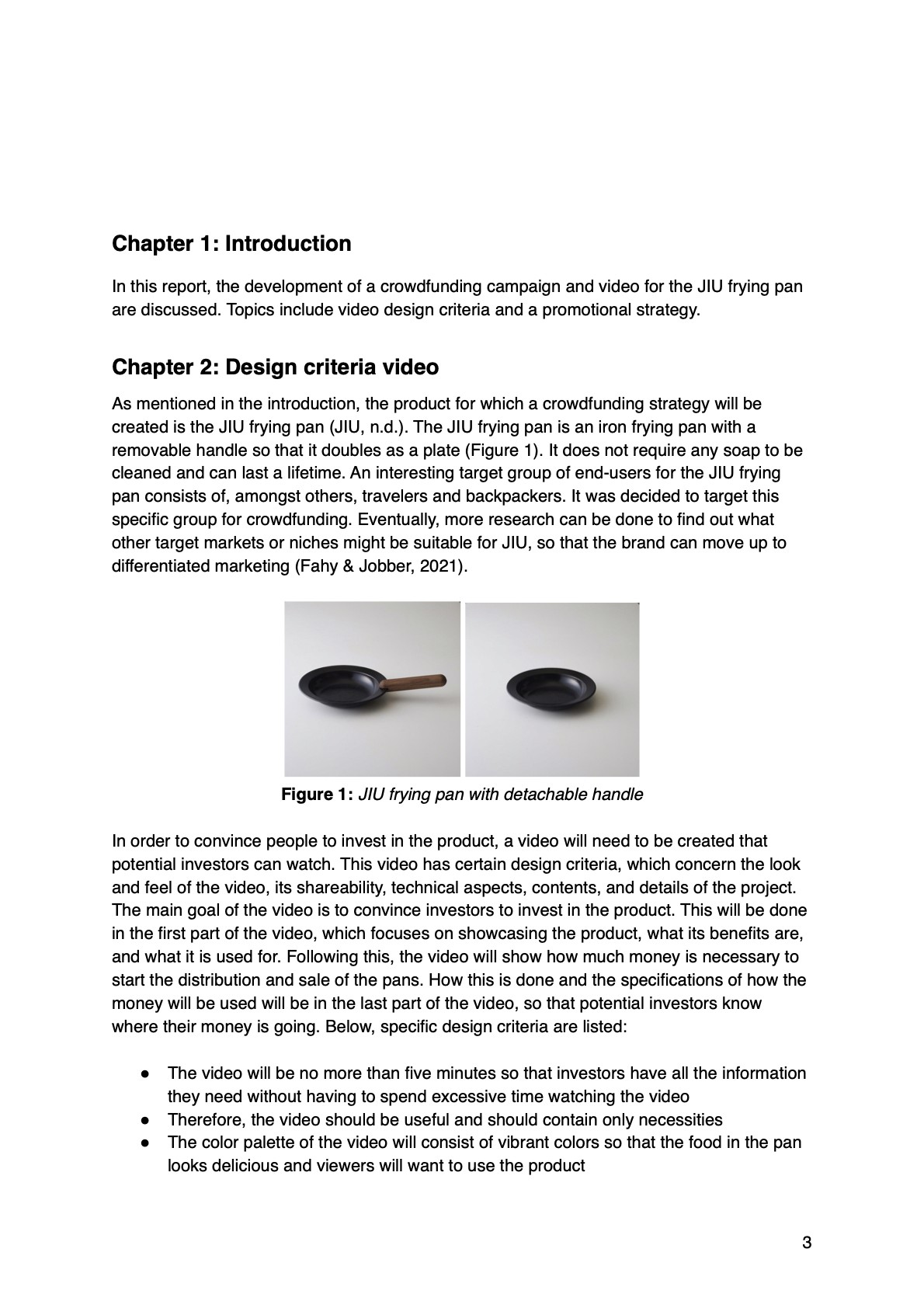
During the New Product Marketing course, I worked in a five-person team on the development of a crowdfunding campaign for the JIU frying pan. The JIU pan is an iron frying pan with a detachable wooden handle, allowing it to function as both a cooking pan and a plate. Its durability, compact design, and simple cleaning process make it particularly suitable for travellers and backpackers.
Our assignment was to translate these product characteristics into a realistic crowdfunding proposition and promotional strategy.
The project required us to consider the campaign from both a customer and an investor perspective. While customers primarily need to understand how the product benefits them, potential investors also need evidence that the product is viable, that there is sufficient market demand, and that their investment will be used responsibly.
Crowdfunding campaign
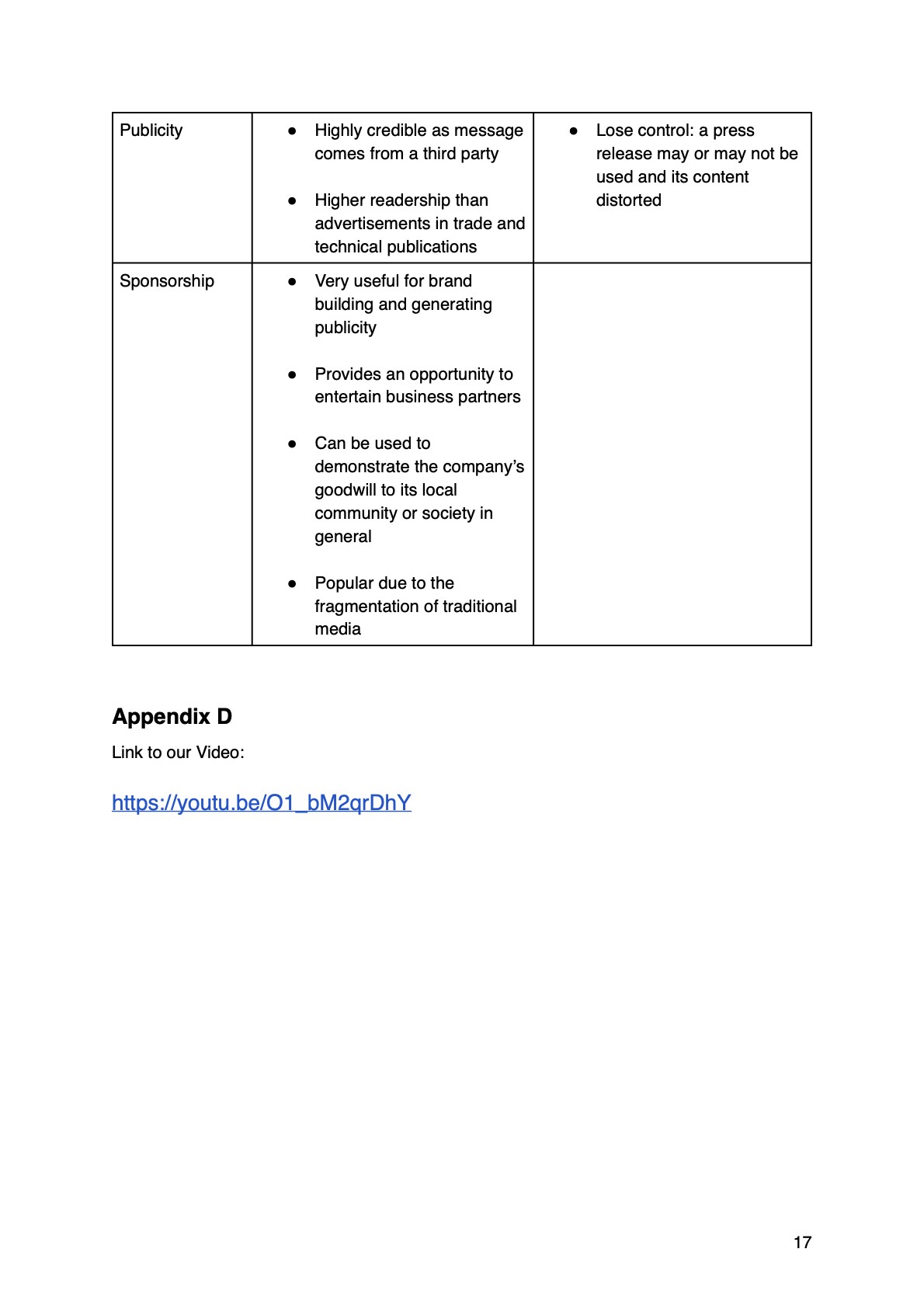
One of the main deliverables was a set of design criteria for a crowdfunding video. The video needed to clearly demonstrate the product, explain its benefits, identify the intended target market, and communicate how the collected funding would be spent. We aimed to keep the video shorter than five minutes so that it would remain informative and engaging. Visual elements, such as vibrant food imagery and scenes connected to travelling and backpacking, were intended to make the product attractive and relevant to the selected audience.
We also calculated a crowdfunding target. The main objective of the campaign was to finance the production of an initial batch of 400 pans and establish a webshop through which the product could be sold. The calculation included estimated manufacturing, packaging, labour, marketing, website development, crowdfunding fees, and reward costs. Based on these elements, the proposed crowdfunding goal was approximately €43,682.
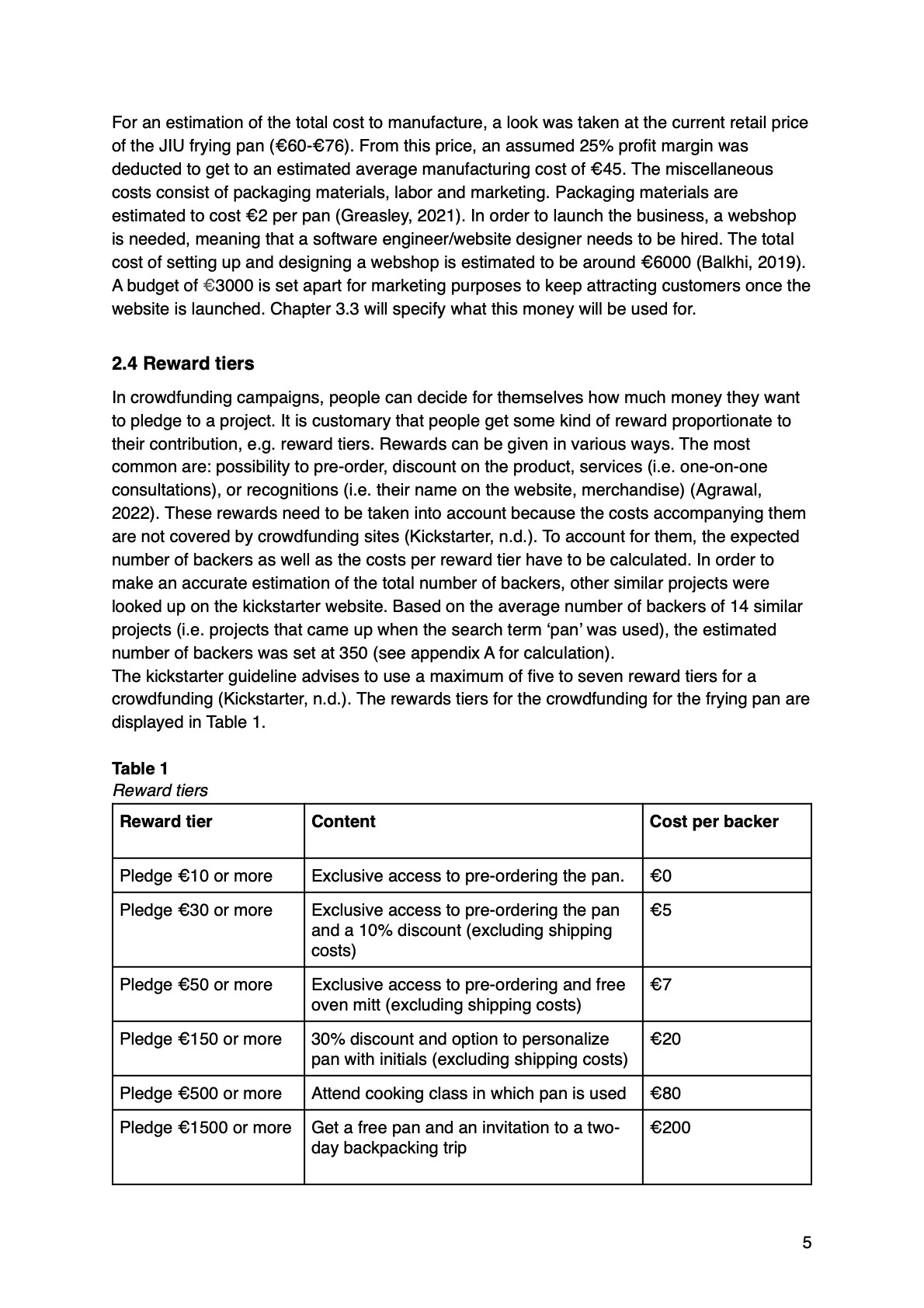
To motivate different types of backers, we developed six reward tiers. These ranged from access to pre-ordering the product to larger rewards such as a personalised pan, a cooking class, or participation in a two-day backpacking trip. The reward system allowed the campaign to address both individual consumers and larger potential investors. We selected a campaign duration of 30 days because a limited timeframe can create urgency and is generally considered more effective for crowdfunding campaigns.
Promotional strategy
The promotional strategy was divided into activities before and during the campaign. The selection of promotional tools was based on factors such as available resources, market concentration, customer information needs, product characteristics, and the relationship between push and pull communication.
Before the campaign launch, the strategy focused on direct marketing and digital communication. Direct marketing was intended to reach retailers and organisations operating in the outdoor and backpacking industry. At the same time, blogs and social media would be used to introduce the product to backpacking communities and direct potential supporters to the crowdfunding page.
During the campaign, the emphasis would shift towards maintaining attention and building relationships with backers. Social media would be used to publish campaign updates, product demonstrations, reviews, collaborations, and advertisements. The website would provide more extensive information about the product and the company. Customer and investor feedback would also be actively monitored, as feedback could be used to improve both the product and its marketing.
Connection to the course
This project helped me apply several central concepts from the New Product Marketing course. First, it required us to connect new product development with the marketing planning cycle. We had to move beyond simply describing the product and instead consider customer needs, segmentation, targeting, positioning, communication, budgeting, and implementation.
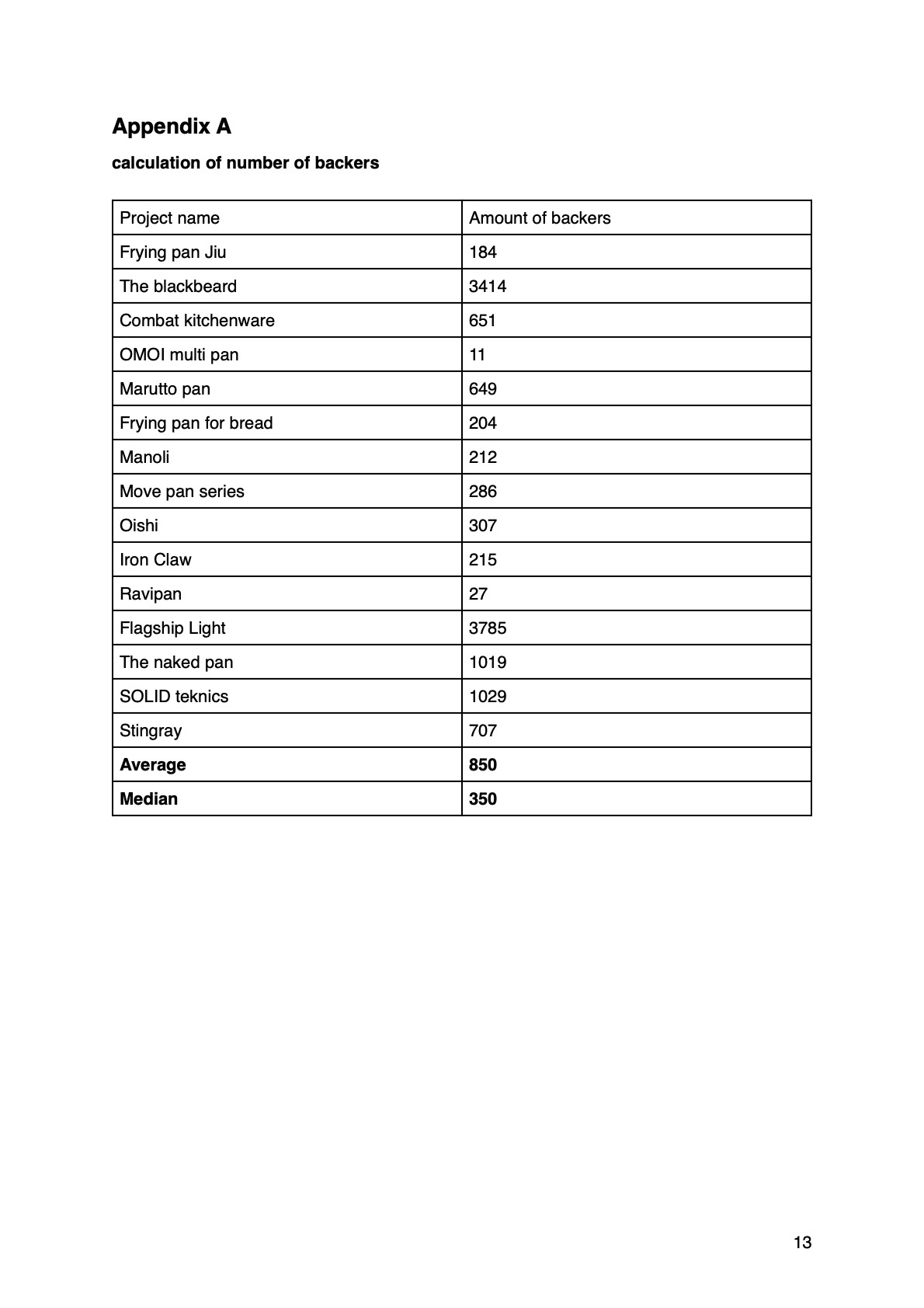
The assignment also developed my ability to apply market research. We used secondary research to investigate the backpacking equipment market, analyse comparable crowdfunding projects, estimate the number of potential backers, and evaluate the costs and effectiveness of different promotional methods. This demonstrated how information about the micro and macro environment can influence marketing decisions.
Furthermore, the project showed that marketing is not limited to selling. It involves creating and communicating an offering that provides value to customers, investors, partners, and other stakeholders. A successful campaign must therefore combine a valuable product with a credible business proposition and a clear communication strategy.
Reflection
The most important insight I gained was the difference between marketing a product to customers and presenting a business opportunity to investors. Customers need to understand why a product is useful and how it solves a problem. Investors require additional information about risks, expected demand, costs, feasibility, and the use of their funding. This means that a crowdfunding campaign must combine emotional product communication with rational financial justification.
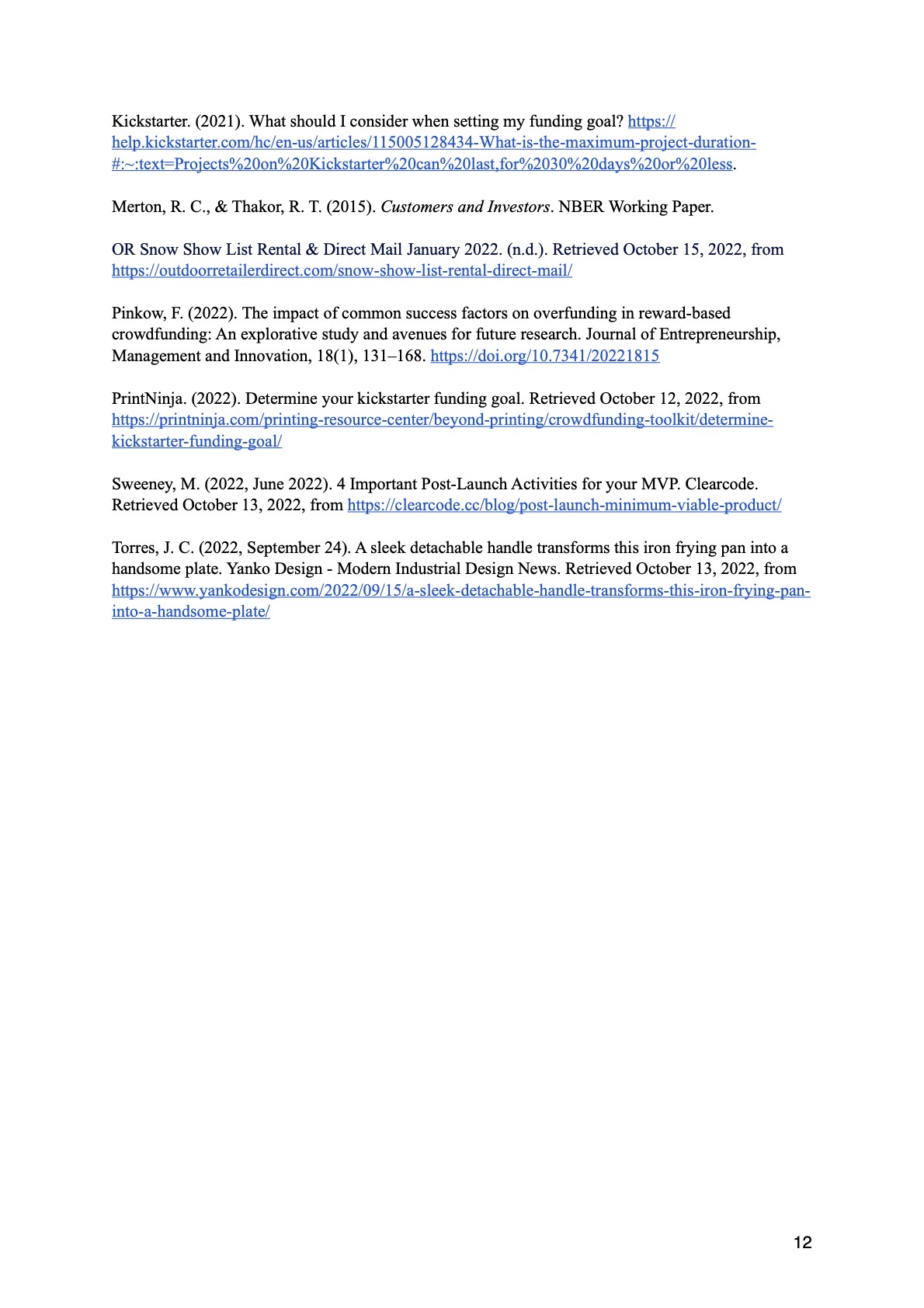
I also learned how difficult it is to create reliable financial estimates when limited primary information is available. Several calculations in the report were based on assumptions and online secondary sources. For example, manufacturing costs were estimated using the retail price of the product, while the expected number of backers was based on comparable Kickstarter campaigns. Although these methods enabled us to develop a complete proposal, they also introduced uncertainty. In a professional project, I would improve this process by contacting manufacturers, interviewing potential customers, requesting quotations, and testing willingness to pay before establishing the final campaign target.
Another learning point concerned market selection. Travellers and backpackers formed a logical niche because the product is compact, durable, and multifunctional. However, the research did not fully establish how large this specific segment was or whether backpackers considered a detachable frying pan a priority purchase. Future research should therefore include surveys, interviews, or prototype testing with members of the target group. The results could be used to refine the product positioning and identify additional segments, such as campers, students, people living in small homes, or consumers interested in durable cookware.
The project also strengthened my understanding of integrated marketing communication. Initially, it was tempting to select promotional channels mainly because they were affordable. However, the assignment showed that channels should be selected according to the behaviour and information needs of the target audience. Digital communication is useful because it is measurable and relatively inexpensive, but personal interaction, credible reviews, partnerships, and continuous communication remain important for establishing trust.
Overall, this project gave me practical experience in transforming a product idea into a structured marketing and crowdfunding plan. It improved my ability to connect theory with a realistic business situation, evaluate different marketing options, work with incomplete information, and reflect critically on the reliability of strategic decisions.
PD: Due to health issues I couldn't attend the examinations, which resulted in a fail however, I still learnt a lot during the course.